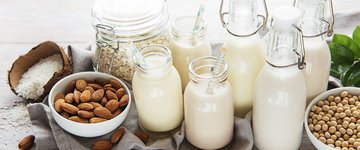
Plant proteins are promising sustainable alternatives to animal-derived food ingredients in products such as plant-based milk, yoghurt alternatives, sauces and dressings, but their ability to stabilize these emulsion-based products varies considerably. The key lies at the oil-water interface, where proteins adsorb and form a protective layer around oil droplets.
In this thesis project, you will investigate how plant proteins behave at this interface and how their interfacial properties influence droplet formation and emulsion stability. This is important for understanding how plant proteins work and how we can use them to design better plant-based foods.
Depending on your interests, the project can focus on protein adsorption, interfacial rheology, microfluidics and droplet formation, or emulsion stability and microstructure. You will work with plant proteins such as those from pea and gain experience with experimental techniques used in food colloid science.
The project is aligned to UN's SGD: